A word from our lead scientists.
Professor Rachael James and Professor Guy Kirk explain

You can be forgiven for thinking 'enhanced rock weathering' sounds a bit dull. But this carbon removal technique packs serious punch.
Basalt rock weathering is a natural part of the earth's carbon cycle, responsible for about 10 gigatonnes of carbon removal, every year. All rain contains carbon (carbonic acid) which becomes a bicarbonate, or a more stable form of carbon, when it falls on basalt rock and weathering occurs. This bicarbonate is then washed through soils and river systems to oceans where it's permanently stored for hundreds of thousands of years.
'Enhanced' rock weathering mimics this process. Using a by-product from UK basalt quarries, the Carbon Bank works with local farmers to spread finely crushed basalt rock dust onto arable or pastureland. When it rains, the crushed rock dust creates the same bicarbonate which passes through our river systems to be safely stored in the ocean. It's exactly the same process as natural rock weathering, but faster. What's more, the basalt rock dust is also rich in essential plant nutrients, like calcium and magnesium which improves crop yields and soil alkalinity, reducing the need for expensive fertilisers.
Permanent carbon removal, healthier soils, less chemical pollution and working with farmers to improve UK food security and safeguard harvests for the generations to come? Nothing dull about that.
Professor Rachael James and Professor Guy Kirk explain
Adding basalt has many benefits to both soil and plant health
Quarries create thousands of tonnes of unused basalt rock dust.
The rock dust is transported to a nearby local farmer.
The dust is spread on fields and begins to weather when it rains.
Bicarbonate is stored safely and permanently in our oceans.
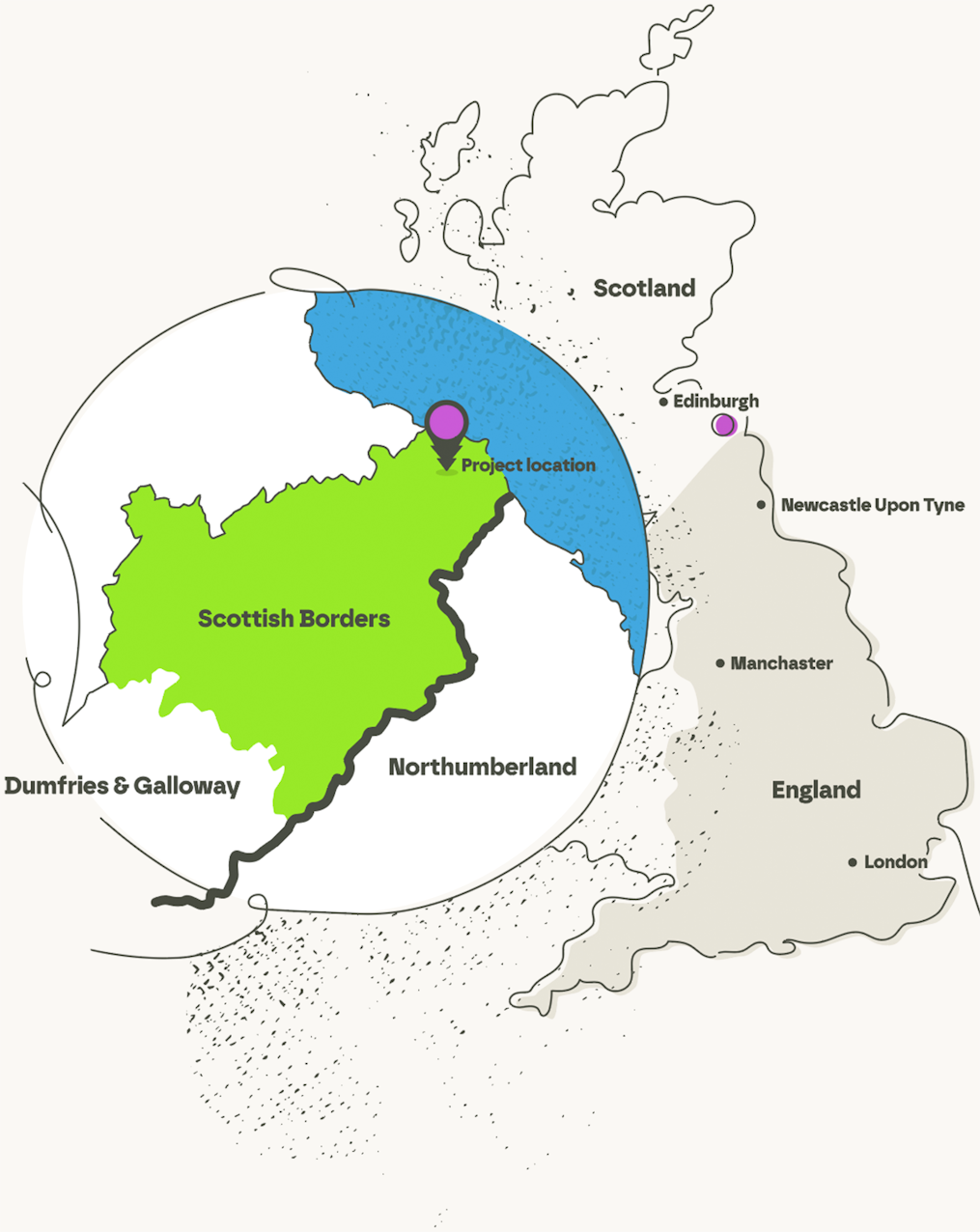
Our project location in Scotland and the Northeast was chosen given its proximity to eight basalt quarries and suitable arable and pasture land. Flat arable fields and soils with a slightly acidic pH between 5.5 – 6.5 with a sandy-loam to clay-loam texture are preferred for effective weathering and accuracy of measurement.
We work with local farmers with a sustainable and committed approach to their land. Our farming partners have good historical management data, so we know what inputs soils have previously received. We also work with Henzell Enterprises, a trustworthy local transport and spreading partner, highly valued by the surrounding farming community.
We're growing the project every year so send us a message if you're interested to know more.
We abide by the Integrity Council for the Voluntary Carbon Market's 'Ten Core Carbon Principles' and we follow the high-integrity methodology for enhanced rock weathering, the Isometric Protocol.
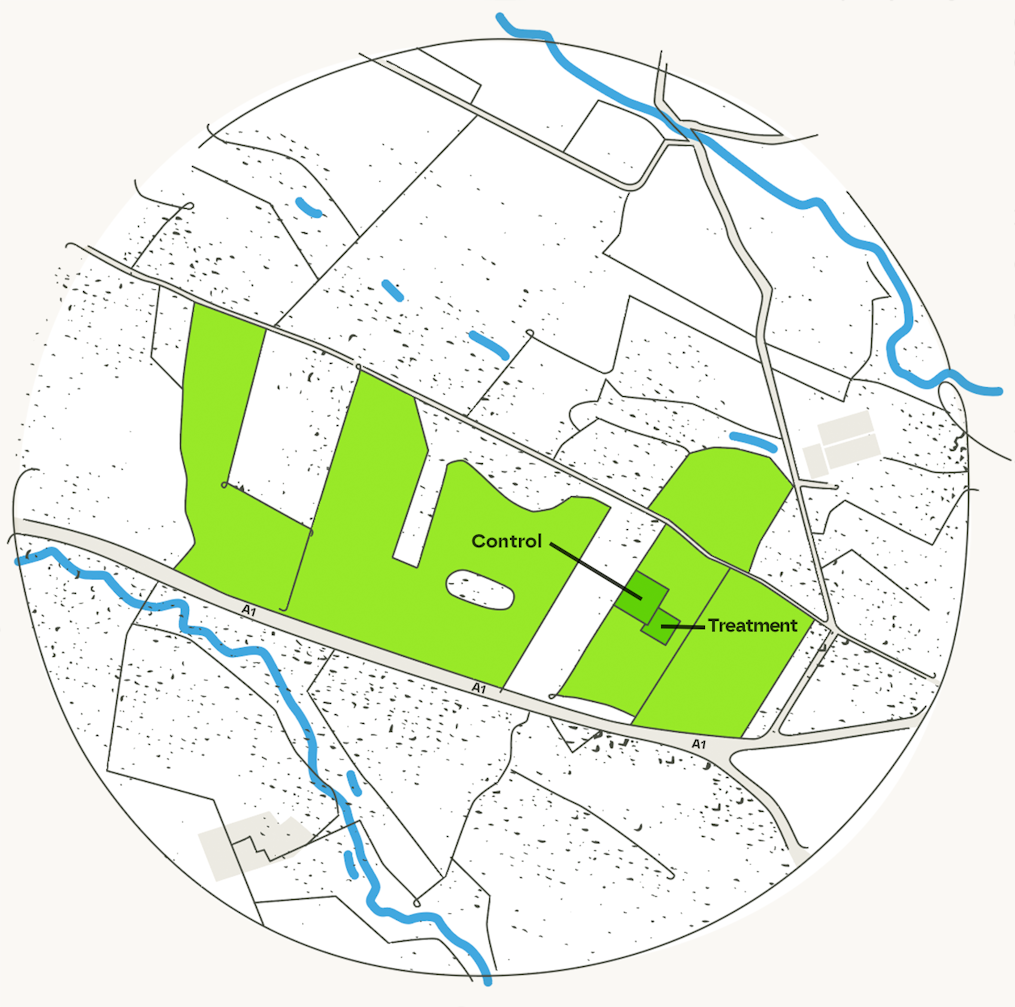
Our project design is a 3-plot approach with a representative area acting as a Control (a 'counterfactual' with no basalt applied), alongside Treatment and Deployment areas. We measure both carbon removal and other environmental co-benefits for soil health and crop nutrition.
We work with leading academics from Cranfield University and the University of Southampton who specialise in enhanced rock weathering and we are always looking at new ways to make measurement more efficient, but never less accurate.
The project measures carbon sequestration and co-benefits to soils and crops.
Soil samples are taken before basalt dust is spread and again after each harvest. Soils are sampled at various depths and analysed for pH, exchangeable acidity, base cations, total cations, organic and inorganic carbon. Soil waters are measured throughout the year after significant rainfall. Lysimeters installed in the fields capture waters passing through the soil and are analysed for pH, electrical conductivity, alkalinity, dissolved cations and anions and presence of heavy metals. Above-ground plant measurements are collected at harvest with bulked samples of shoots, roots and grain. We calculate plant uptake of each element as well as macro- and micro-nutrients and heavy metals.
All analyses take place at Cranfield and Southampton University laboratories.
Carbon removal is vital to combat the effects of climate change. Nothing else will do. Enhanced rock weathering has the potential to remove approximately 2,000,000,000 tonnes of carbon per year.
Our UK project is a small part of this, but silicate rocks are commonly available all over the world. We want to show how enhanced rock weathering can be done well, then share our learning and experiences with others to launch their own projects.
So, that’s 2,000,000,002 reasons.
Whether you're a farmer, landowner, quarry, corporate, student, journalist or just curious - drop us a message, we'd love to hear from you.